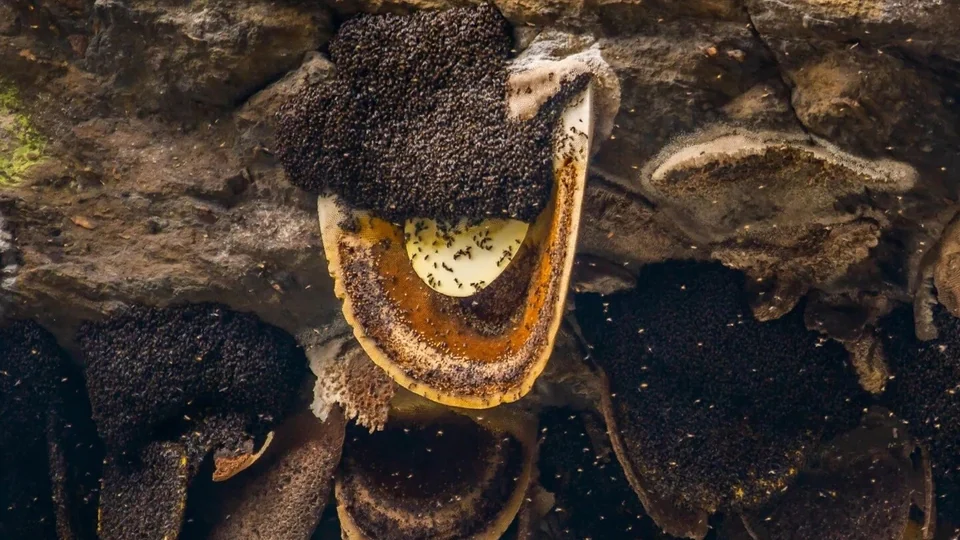
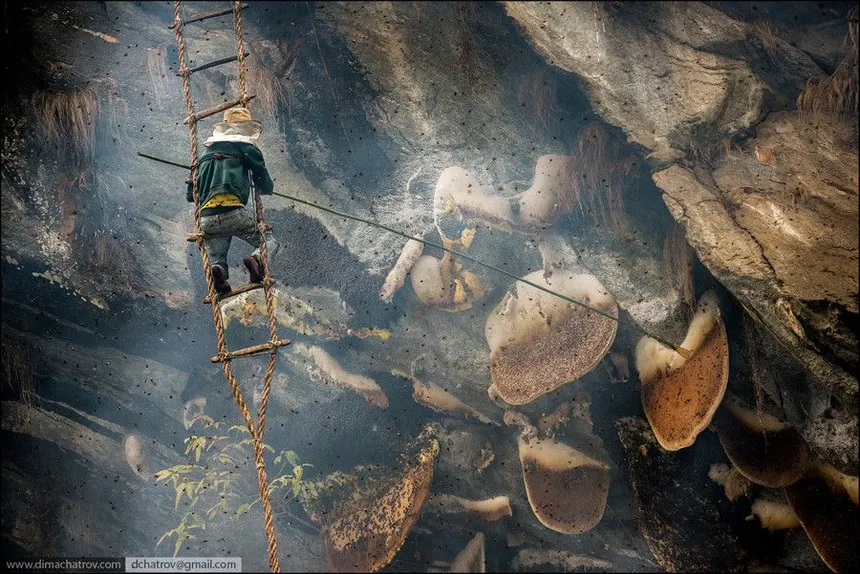
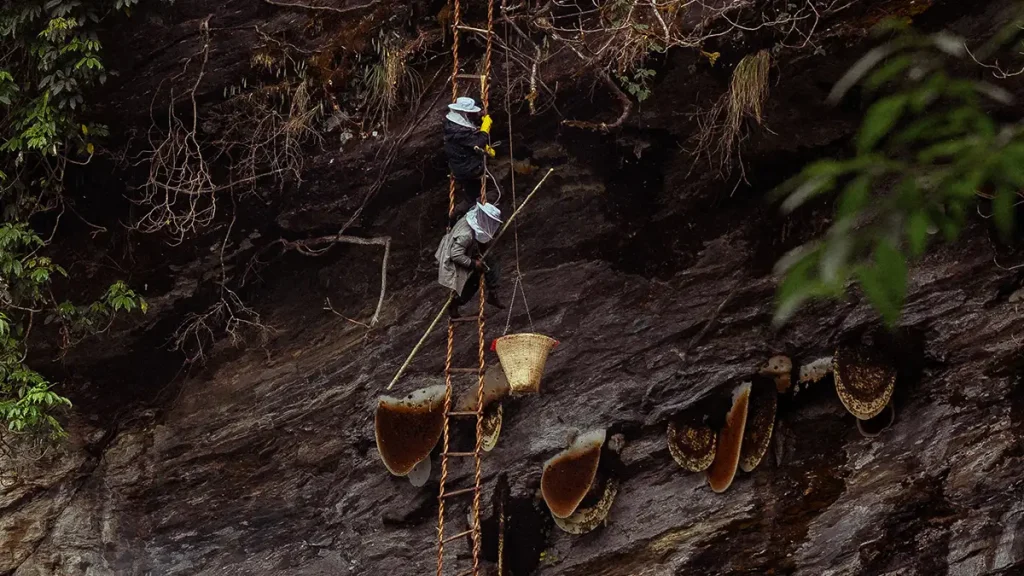
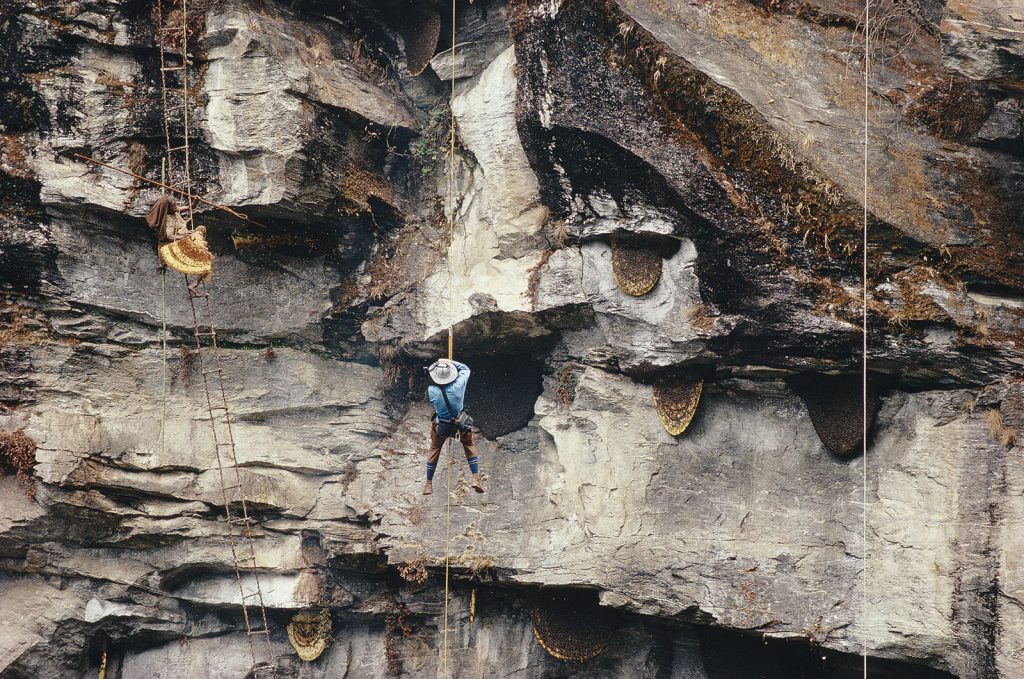
High in the central Himalayas, where mountains rise so steeply they seem to tear the sky itself, honey is not collected—it is earned. At dawn, when the light first touches the cliffs, honey hunters begin their ascent. Rope ladders woven from bamboo and grass creak under their weight, suspended hundreds of meters above rushing rivers that are felt more than seen. There is no machinery here, no safety net beyond knowledge passed through generations. The air is thin, sharp, and alive. Giant honeybees, Apis laboriosa, circle their hives in disciplined arcs, their wings humming with warning and authority. When the hunter finally reaches the comb and cuts into it, thick amber honey spills slowly, heavy with altitude, memory, and danger. Each drop carries the silence of the mountain and the risk of the climb. This is the origin of Himalayan wild honey—often called mad honey—not a commodity born of convenience, but a substance shaped by geography, restraint, and respect.
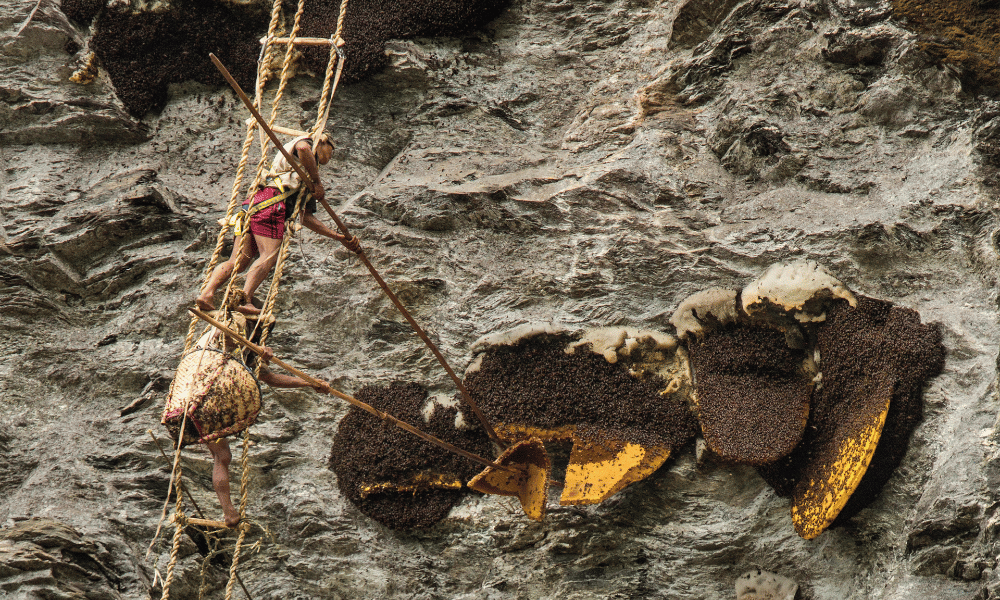
Historically, Himalayan communities did not seek mad honey for novelty or intoxication. For centuries, it was harvested sparingly as part of seasonal life. Before the 18th century, its use was largely local—small quantities consumed during cold months, long journeys, or ceremonial occasions. Honey hunting was never casual; it was embedded in survival and spirituality. As trade routes expanded and knowledge traveled beyond the mountains, awareness of honey’s medicinal and preservative properties grew. By the late 18th and early 19th centuries, mad honey began to attract attention beyond its native valleys. Its rarity, strength, and difficulty of harvest elevated it from a subsistence product to one of the most valuable honeys in the world. This transformation was not driven by abundance, but by scarcity and risk.
The honey hunters themselves—primarily from Gurung, Tamang, Magar, and other Himalayan communities—are custodians of an ancient relationship with the land. Honey hunting is not merely a livelihood; it is cultural inheritance. Knowledge is passed orally, from elders to younger generations, including when to harvest, which hives to leave untouched, and how to read the mountain’s signs. Rituals often precede the harvest: prayers to the mountain, offerings to ensure safety, and gestures of respect toward the bees. The cliffs are never treated as conquered territory. Instead, they are approached with humility, acknowledging that humans are guests in a larger ecological order. This restraint is what has allowed honey hunting to survive for centuries without destroying the very systems that sustain it.
From a scientific perspective, mad honey’s effects are well documented yet often misunderstood. The grayanotoxins present in certain rhododendron nectars affect sodium channels in the nervous system, which can lead to symptoms such as dizziness, nausea, sweating, low blood pressure, or slowed heart rate when consumed in excess. Importantly, there is no laboratory test that directly measures grayanotoxin levels in the human body. Diagnosis relies on a careful history of consumption combined with observed clinical symptoms. Potency varies widely depending on floral source, altitude, harvest timing, and storage, which is why traditional communities emphasize extreme moderation.
Modern medical understanding treats mad honey intoxication as manageable with appropriate care. In most cases, supportive treatment—including intravenous saline infusion and atropine sulfate—has proven effective in stabilizing patients. In rare severe instances, temporary cardiac pacing or Advanced Cardiac Life Support (ACLS) bradyarrhythmia protocols may be required. With proper monitoring, most individuals recover fully within six to twenty-four hours. This medical reality reinforces what Himalayan cultures have always known: mad honey is powerful, but not reckless when respected.
Within traditional Himalayan wellness practices, mad honey has long been valued not as a daily supplement, but as a seasonal tonic used in extremely small amounts. Indigenous knowledge associates it with digestive comfort, warmth during cold months, relaxation, and general vitality. Like all raw honey, it possesses natural antibacterial and antifungal properties. These perspectives are cultural rather than clinical, grounded in lived experience rather than laboratory trials, and they exist alongside clear caution against overuse.
One of the most remarkable aspects of mad honey is its longevity. Honey is one of the few foods on Earth that does not spoil when stored properly. Archaeologists have famously discovered honey over 3,000 years old in Egyptian pyramids that remained edible. Himalayan wild honey shares this natural preservation. Over time, its color may darken and its psychoactive potency may gradually diminish, but its nutritional and traditional medicinal qualities remain stable. There is no true expiry date—only a slow transformation shaped by time.
Traditionally, consumption guidelines are strict and universal across Himalayan regions. A half teaspoon or less is considered sufficient, taken occasionally rather than regularly. Mad honey is never combined with alcohol or other psychoactive substances, and it is not recommended for children, pregnant women, or individuals with heart or blood-pressure conditions. These guidelines are not modern regulations; they are survival knowledge refined over generations.
In recent years, global demand for Himalayan wild honey has increased dramatically, particularly in parts of Asia, Europe, and North America. Its rarity, harvesting risk, and cultural narrative have positioned it within premium wellness and specialty food markets. However, this demand has also introduced serious challenges, including counterfeit products, dilution, and misrepresentation. Without transparency and ethical sourcing, both consumers and mountain communities are at risk of exploitation.
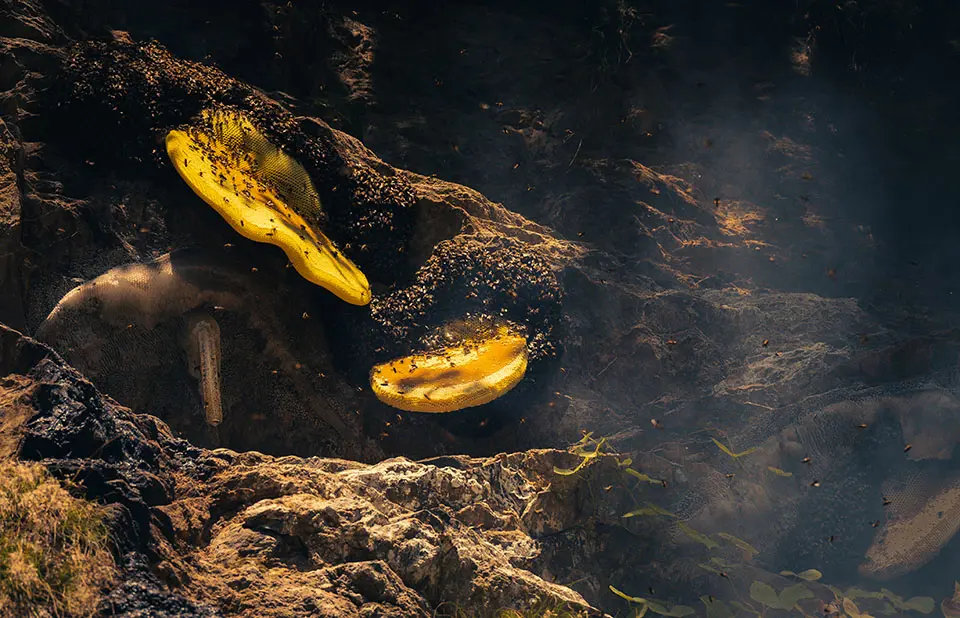
The future of Himalayan wild honey depends on restraint and respect. Overharvesting threatens bee populations, fragile cliff ecosystems, and cultural continuity. Sustainable, community-led harvesting models—where local people control timing, quantity, and pricing—offer the only viable path forward. Mad honey cannot be industrialized without destroying its essence. It survives only when humans know when to stop.
Himalayan wild honey is more than a substance. It is a living relationship between humans and mountains, bees and flowers, risk and reverence. Each drop carries altitude, ancestry, and silence. In a world obsessed with speed and abundance, mad honey stands as a reminder that the rarest things are not produced—they are permitted. High above the valleys, where wind rules and time slows, the mountains still decide who may taste their gold.