Bardiya Wildlife Safari

An Exclusive Luxury Wilderness Experience by Himalayan Trails & Tales

The Bardiya Wildlife Safari is an immersive luxury journey into the unspoiled wilderness of Bardiya National Park, Nepal’s largest and most pristine protected area. Designed for nature lovers, wildlife photographers, and luxury travelers, this experience blends high-end comfort with authentic jungle adventure.

Your journey begins with seamless private transfers to elegant Tharu-inspired lodges set deep within the park’s natural surroundings. These boutique eco-lodges offer a perfect balance of rustic charm and modern luxury—complete with air-conditioned rooms, en-suite facilities, warm hospitality, and stunning views of the wilderness.

Days in Bardiya are filled with expert-led wildlife safaris—either on foot or in open-top jeeps—providing rare opportunities to encounter Royal Bengal tigers, one-horned rhinos, Asian elephants, swamp deer, gharials, and over 400 bird species. Beyond the classic safari, guests may enjoy birdwatching, river adventures, canoe excursions, and cultural interactions with local Tharu communities.

After thrilling wildlife encounters, unwind with gourmet dining, spa indulgences, riverside relaxation, or sunset drinks overlooking the Terai plains. Evenings may include storytelling sessions, conservation talks, or night safaris to spot Bardiya’s elusive nocturnal creatures.

A portion of every tour directly supports conservation and community initiatives, ensuring your journey contributes to the long-term protection of Bardiya’s wildlife and local culture.

For travelers seeking a rare blend of luxury, wilderness, and authentic Nepali heritage, the Bardiya Wildlife Safari with Himalayan Trails & Tales promises an unforgettable adventure in one of the most magical corners of Nepal.

A Signature Wilderness Experience by Himalayan Trails & Tales


 National Park Facts 

Established: 1988

Area: 968 sq. km

Endangered Mammals: Swamp Deer, Royal Bengal Tiger, Gangetic Dolphin

Endangered Birds: Peafowl, Sarus Crane, and more

Total Bird Species: 407

Total Mammal Species: 53

Bardiya National Park stands as Nepal’s most untouched wilderness haven—rich, vast, and teeming with remarkable biodiversity.

 Safari Activities 

Jeep Safari

Explore deep into the park’s diverse habitats in a guided 4×4 jeep. The best way to spot tigers, rhinos, elephants, deer, and rare birds in their natural environment.

Guided Jungle Walk

Experience the jungle at ground level with skilled naturalists. Perfect for close-up encounters, photography, and a deep connection with nature.

Rafting Safari

Float along the Karnali River, witnessing riverine wildlife, aquatic birds, gharials, and the magical landscapes along the banks.

Birdwatching

With over 400+ species, Bardiya is a paradise for bird enthusiasts. Spot cranes, kingfishers, storks, floricans, and many rare species.

Tharu Village Walk

Engage with the indigenous Tharu community—visit their homes, experience cultural traditions, join local dances, and enjoy authentic hospitality.


 Wildlife Highlights

  • Bardiya is home to some of the most iconic and endangered species in Asia:
  • Royal Bengal Tiger – Bardiya is one of Nepal’s top tiger-tracking destinations
  • One-Horned Rhinoceros – thriving population reintroduced from Chitwan
  • Asian Elephant – often seen in herds along riverine forests
  • Leopard & Sloth Bear – elusive but present in healthy numbers
  • Swamp Deer (Barasingha) – one of the last strongholds of this rare species
  • Gangetic Dolphin – found in the Karnali River
  • Other Mammals: Sambar, Spotted Deer, Blue Bull, Hog Deer, Langur, Rhesus Macaque, Honey Badger, Otter
  • Birdlife: Bengal Florican, Sarus Crane, herons, egrets, kingfishers, and hundreds more
  • Reptiles: Mugger Crocodile, Gharial, Indian Rock Python, freshwater turtles
  • Bardiya offers one of the highest chances of tiger sightings in all of Nepal.


Park Rules & Responsible Travel (Short Professional Version)

To ensure safety and support conservation, please follow these essential guidelines:

Carry a valid park entry permit

Stay on designated trails

Maintain distance & avoid disturbing wildlife

Follow your guide at all times

Do not litter; carry out your waste

No smoking or alcohol inside the park

Wear neutral-colored clothing

Avoid flash photography

Do not damage plants or natural features

Respect local communities and customs

Your respect for these rules helps protect Bardiya’s fragile ecosystems and supports sustainable tourism.


What to Bring – Bardiya Wildlife Safari

Essential Packing Guide by Himalayan Trails & Tales

Prepare wisely for your luxury Bardiya adventure with items that ensure comfort, safety, and seamless safari experiences.

 Clothing Essentials

Lightweight, breathable, neutral-colored clothing for blending into nature

Long-sleeved shirts & pants for sun and insect protection

Wide-brimmed hat & UV-protected sunglasses

Comfortable walking shoes or sturdy hiking boots

Weather & Layering

Rain jacket or poncho during unpredictable showers

Warm layers (light jacket or fleece) for cool mornings and evenings

 Safari Gear

Binoculars for exceptional wildlife viewing

Camera with spare batteries & memory cards

Insect repellent for protection against mosquitoes

Personal Care

High-SPF sunscreen

Essential personal medications

Basic first-aid kit

Toiletries (preferably biodegradable)

Hand sanitizer & wet wipes

Travel Essentials

Passport, ID & required permits

Cash for small expenses & tips

Copies of travel documents (digital or printed)

Useful Extras

Reusable water bottle

Small daypack for daily excursions

Snacks for long game drives

Portable charger / power bank


History of Bardiya National Park – A Legacy of Conservation

Preserved Wilderness, Protected Heritage

The roots of Bardiya National Park date back to the 19th century, when the region was used as a royal hunting reserve under Nepal’s Rana rulers. Over time, excessive hunting and habitat loss threatened the area’s wildlife, prompting conservation action.

In 1976, the area was officially declared Bardiya National Park, supported by a dedicated buffer zone and increased protection. Anti-poaching efforts, habitat restoration, and strong community involvement gradually revived the park’s wildlife population.

Recognizing its ecological significance, Bardiya was declared a Tiger Reserve in 2005.

Today, Bardiya is celebrated as one of Nepal’s premier wildlife destinations, home to:

Royal Bengal Tigers

One-Horned Rhinoceroses

Wild Asian Elephants

Swamp Deer (Barasingha)

Ganges River Dolphins

Gharial & Mugger Crocodiles

Hundreds of bird, reptile & mammal species

A luxury safari with Himalayan Trails & Tales offers exclusive access to this extraordinary wilderness — through jeep safaris, river adventures, guided jungle walks, and immersive nature experiences, all while supporting ongoing conservation and community-led protection efforts.

 

Janakpur Pilgrimage Tour

Journey Starts: Kathmandu

Journey Ends: Kathmandu

Travel Style: Nepal Pilgrimage Tour

Difficulty: Easy

Accommodation: Hotel

Best Season: Mar, Apr, May, Sep, Oct, Nov & Dec

Transportation: Private Vehicle (Kathmandu → Janakpur → Kathmandu)


About the Janakpur Pilgrimage Tour

The Janakpur Pilgrimage Tour by Himalayan Trails & Tales is a spiritually enriching journey into the heart of Mithila culture and the timeless legends of the Ramayana. This sacred experience takes you through the revered sites connected to Lord Rama and Goddess Sita, blending religious devotion, ancient history, and cultural heritage.

Located in southeastern Nepal, Janakpur — also known as Janakpurdham — once served as the capital of the ancient Mithila Kingdom, ruled by the wise King Janak. According to the Hindu epic Ramayana, it was here that King Janak discovered baby Sita in a sacred furrow, raising her as his beloved daughter. Sita, believed to be the earthly incarnation of Goddess Laxmi, grew up in this holy land.

At the age of sixteen, King Janak announced that Sita would marry the one who could lift — and string — the divine bow of Lord Shiva. Countless royal princes attempted the challenge, but only Lord Rama, prince of Ayodhya and the incarnation of Lord Vishnu, succeeded. In doing so, Rama broke the sacred bow into three parts:


One piece disappeared into the earth

Another flew across the sky

The third fell at Dhanusha, making it a revered pilgrimage site now known as Dhanusha Dham

Their auspicious marriage took place in Janakpur and is still honored at the holy Ram–Sita Bibaha Mandir, one of the central attractions of the tour.


Pilgrimage Sites You Will Visit

Your Janakpur spiritual journey includes guided visits to:

Janaki Temple – the iconic marble shrine dedicated to Goddess Sita

Ram Sita Bibaha Mandap – sacred site marking the divine wedding

Ram Mandir – a temple honoring Lord Rama

Dhanush Sagar – one of Janakpur’s sacred bathing ponds

Dhanusha Dham – where a fragment of Shiva’s bow fell

Several other culturally rich temples & holy sites of the Mithila kingdom

Journey Overview

Your pilgrimage begins with an eight-hour private drive from Kathmandu. The journey follows the scenic BP Highway, winding through Dhulikhel and Sindhuli. After Bardibas, the road descends into the lush Terai plains, eventually reaching Janakpur — a land of temples, cultural charm, and spiritual energy.

Standing just 225 km from Kathmandu at an altitude of 74 meters, Janakpur lies close to the Nepal–India border and is also accessible via a 35-minute flight.

After check-in and rest, you will explore the spiritual and cultural treasures of Janakpur over two days, guided by knowledgeable experts. The tour concludes with your return to Kathmandu and a final day dedicated to visiting UNESCO World Heritage Sites in the valley.


Your pilgrimage begins with an eight-hour private drive from Kathmandu. The journey follows the scenic BP Highway, winding through Dhulikhel and Sindhuli. After Bardibas, the road descends into the lush Terai plains, eventually reaching Janakpur — a land of temples, cultural charm, and spiritual energy.

Standing just 225 km from Kathmandu at an altitude of 74 meters, Janakpur lies close to the Nepal–India border and is also accessible via a 35-minute flight.

After check-in and rest, you will explore the spiritual and cultural treasures of Janakpur over two days, guided by knowledgeable experts. The tour concludes with your return to Kathmandu and a final day dedicated to visiting UNESCO World Heritage Sites in the valley.

A Sacred Experience Awaits

The Janakpur Pilgrimage Tour by Himalayan Trails & Tales is a soulful blend of faith, cultural immersion, and historical discovery — perfect for pilgrims, cultural travelers, and anyone seeking a deeper connection with Nepal’s spiritual heritage

A Sacred Experience Awaits

The Janakpur Pilgrimage Tour by Himalayan Trails & Tales is a soulful blend of faith, cultural immersion, and historical discovery — perfect for pilgrims, cultural travelers, and anyone seeking a deeper connection with Nepal’s spiritual heritage

Ruby Valley Trek

An unexplored beauty amidst the Himalayas, the Ruby Valley package lets you enjoy scenic elegance along with cultural and traditional virtue. Ruby valley lies in between Langtang National Park and Manaslu Conservation Area, but it is much more than just a marvelous landscape. The whole trek takes place in a homely environment with homestays rather than in hotels/lodges providing an authentic Nepali experience that you will hardly experience anywhere else.

Highlights of Ruby Valley Trek

  • Newly opened and unexplored trekking destination close to the capital city of Kathmandu

Relaxing natural hot springs

  • Panoramic closeup view of Ganesh Himal, Langtang Himal, and Manaslu Himal

Pangsang La Pass (3,842 m /12,604ft)

  • Diverse terrain farmland, green meadow, and rocky hills
  • Home to the domestic animals like sheep, yak, goat, and ox and exotic animals like musk deer, leopards.
  • Dense rhododendron, pine, oak, and bamboo forests
  • Raging rivers with suspension bridges, gorges, waterfalls, and stone-driven mills
  • Unique, rich, culture and traditions of Tamang, Gurung, Brahmin, and Dalits

Ruby Valley Trek Overview

The Ruby Valley Trek is a hidden gem in the Ganesh Himal region of Nepal. This week-long adventure offers trekkers an off-the-beaten-path experience with authentic cultural immersion in traditional Tamang and Gurung villages. With fewer tourists than the popular trails, you’ll enjoy spectacular mountain views, making it the perfect escape for those seeking peace, pristine nature, and genuine local interactions.


The trek takes you through the pristine Ruby Valley—named for its deposits of precious stones—where you’ll traverse diverse landscapes, ranging from terraced fields and dense forests to high alpine pastures. Along the way, key geographical features such as natural hot springs and waterfalls punctuate your journey, while expansive ridgelines offer panoramic views of the dramatic backdrop of the Ganesh Himal range, with peaks soaring above 7,000 m.

Starting with a scenic drive from Kathmandu to Syabrubesi (1503m) in the vicinity of the Langtang region, the itinerary unfolds through remarkable villages such as Gatlang, Somdang, Tipling, and Chalis Gaon. While on the route, you can catch panoramic views of the Himalayas, along with diverse farmlands, green meadows, and rocky hills. You can see 23 snow-capped mountains from the trails, including Manaslu, Ganesh Himal Range, Annapurna Range, Langtang Range, Tibetan Himalayas, and Dorje Lakpa Himal.

From Chalis Gaon, you will trek to Borang and take a local jeep to Dhanding Besi, and from Dhading Besi, you will return to Kathmandu on a local bus.

Each stop delivers rich cultural experiences—from traditional households and local monasteries to the vibrant customs of the indigenous communities—ensuring that every moment is steeped in Nepalese tradition and heritage.


Ruby Valley Trek – 7 Days Short Itinerary

Day 1

Kathmandu to Syabrubesi (1503m). Drive Time: Approx. 7-9 hrs.

Day 2

Trek from Syabrubesi via Chawatar (lunch) to Gatlang (2,337m). Trek Time: Approx. 5-6 hrs.

Day 3

Trek from Gatlang to Parvati Kund, Yuri Kharka (lunch) to Somdang (3,271m). Trek Time: Approx. 6-7 hrs.

Day 4

Trek from Somdang via Pangsang Pass (3,842m) to Tipling (2,078m). Trek Time: Approx. 6-7 hrs.

Day 5

Trek from Tipling to Chalish Gaon (1,800m). Trek Time: Approx. 2 hrs.

Day 6 Trek From Chalish to Borang (1,700m). Trek Time: Approx. 2-3 hrs. Drive to Dhading Besi (580m). Drive Time: Approx. 4-5 hrs.

Day 7 Drive from Dhading Besi – Kathmandu (1,310m). Drive Time: Approx. 4-5


Annapurna Circuit Trek – 14 Days Short Itinerary

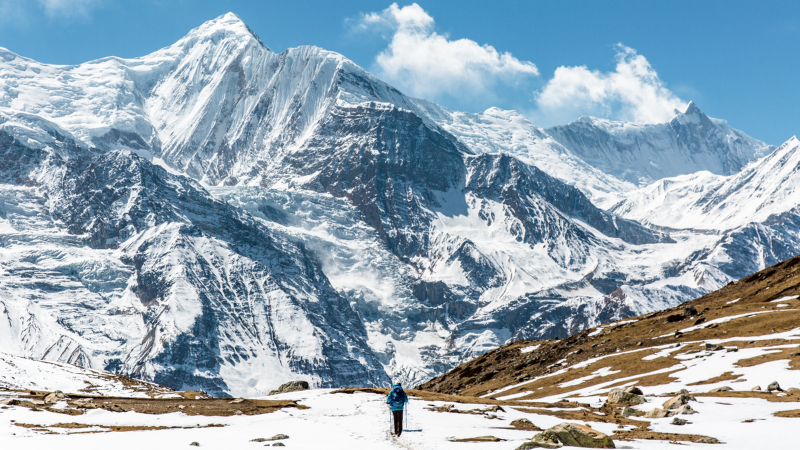
Annapurna Circuit trek is one of the most popular treks in the world, famous for dramatic deep gorges, desolate high mountain passes, fantastic viewpoints (Poon Hill), hot springs, Buddhist and Hindu temples, delightful farming villages, and stunning views of Annapurna summits.

Highlights of the Trek

  • Scenic yak pastures and traditional mountain villages
  • Relax in natural hot springs at Tatopani
  • Explore Jomsom – the gateway to Mustang
  • A leisure day at the vibrant lakeside city of Pokhara
  • Breathtaking views of Annapurna, Dhaulagiri, Nilgiri, Thorung Peak, Chulu West & East, Tukuche, Lamjung Himal, and more
  • Visit the picturesque Manang district with its rich culture
  • Witness stunning lakes, glaciers, gorges, and waterfalls
  • Sacred visit to Muktinath – a holy site for Hindus & Buddhists with 108 stone taps and an eternal flame
  • Adventure across Thorong La Pass (5,416 m) – one of the world’s highest trekking passes
  • Discover Barge Monastery, the largest in Manang
  • Sunrise from Poon Hill Viewpoint (3,210 m) with panoramic Himalayan vistas

The Annapurna Circuit Trek is one of Nepal’s most iconic and diverse trekking experiences, winding through the north-central Himalayas, encircling the mighty Annapurna massif. This legendary trail takes you across lush valleys, high-altitude deserts, and towering snow-covered peaks, offering a mesmerizing blend of geography, climate, and culture. The highest point of the trek, Thorong La Pass (5,416m), is a thrilling highlight, presenting panoramic views of Dhaulagiri, Annapurna, Manaslu, and beyond, as well as the stark contrast between the green, forested eastern slopes and the barren, rugged terrain of the west.


The trek begins in Besisahar, a subtropical region with warm temperatures and terraced rice fields, before progressing through Chame and Pisang, where dense oak and rhododendron forests give way to rocky ridgelines and alpine meadows. As the elevation increases, the landscape shifts dramatically, entering the dry, wind-swept terrain of Manang, a beautiful valley enclosed by towering cliffs and overlooked by Annapurna II and Gangapurna.

Beyond Manang, the ascent becomes more challenging as you reach Yak Kharka and Ledar (4,250m), where oxygen levels drop, and the surroundings feel increasingly isolated and barren. The approach to Thorong High Camp (4,925m) is a final push into a harsh alpine environment, with temperatures dropping significantly and winds cutting through the icy terrain. Crossing Thorong La Pass (5,416m) is the trek’s ultimate challenge, where you are rewarded with uninterrupted Himalayan vistas and the surreal sensation of standing at the edge of two contrasting worlds—the lush Annapurna region and the arid Mustang landscape.

Descending into Muktinath (3,760m), you will find respite in warmer conditions, with the sacred Muktinath Temple, a revered pilgrimage site for Hindus and Buddhists, offering a unique cultural and spiritual experience. The journey continues towards Jomsom and then to Tatopani, where you traverse rugged, river-cut landscapes, gradually returning to forested foothills before concluding in Pokhara, where the lush, subtropical scenery marks the trek’s end.


Note

This trek package, Annapurna Circuit Hike, includes local bus rides from Kathmandu to Besishar or Bhulbhule. If you are willing to bear extra costs, you can return to Kathmandu from Pokhara on a Jeep or a plane.

We also advise our valuable clients to arrive in Kathmandu before 3 pm, one day before the trek departure date, for last-minute preparations.


Online Trip Briefing

The online briefing will clear all your doubts about the trek, including things to bring (equipment checklist) for the hike, the itinerary details, and what you can expect on the trails. As soon as you complete the booking, we will email you the available dates and times for the trek briefing, and once we receive your essential documents, we will conduct the online trek briefing.